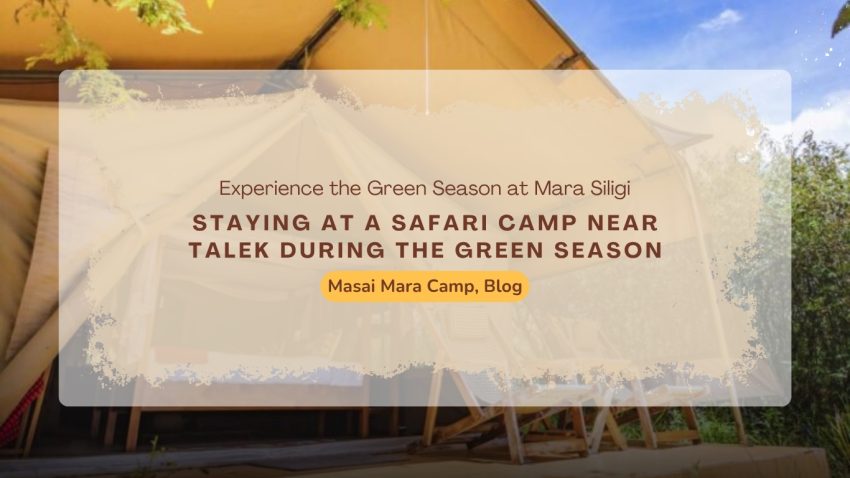
A safari in the Masai Mara during April, May and June is about more than the Great Migration. These months fall within the green season, when rain brings fresh colour to the plains and changes the appearance of the landscape. Staying at a masai mara camp during this period can offer opportunities to look for resident wildlife, observe animal behaviour and enjoy the scenery between showers. The experience differs from the peak migration months, so it helps to understand what the season offers before choosing your travel dates.
Predators remain an important part of the Masai Mara’s wildlife experience during the green season. Lions, leopards and cheetahs may be encountered during guided game drives, alongside resident animals such as elephants, buffalo, giraffes and zebras. However, sightings depend on natural movements, weather and conditions on the day. Thicker grass can make some animals harder to spot, which is one reason an experienced local guide is valuable. Guides interpret tracks, calls and animal behaviour to help visitors understand what is happening around them. Birdlife also adds interest to a green-season safari, with more than 400 recorded bird species across the wider Mara ecosystem.
Choosing the right safari camp in Masai Mara can help you make the most of your time outdoors. Ask whether guided game drives are included, who leads them and how the daily arrangements adapt to weather conditions. A camp with a suitable location near reserve access gates can also help reduce the time spent travelling to reach game-viewing areas. At Mara Siligi Camp, safari packages can include daily guided game drives with a local Masai guide, accommodation, meals and park entry fees. Before booking, confirm the exact inclusions for your chosen dates. If your priority is observing resident wildlife against lush scenery rather than waiting for river crossings, April to June can be worth considering. Keep an open mind, follow your guide’s advice and remember that every drive can bring a different experience.