

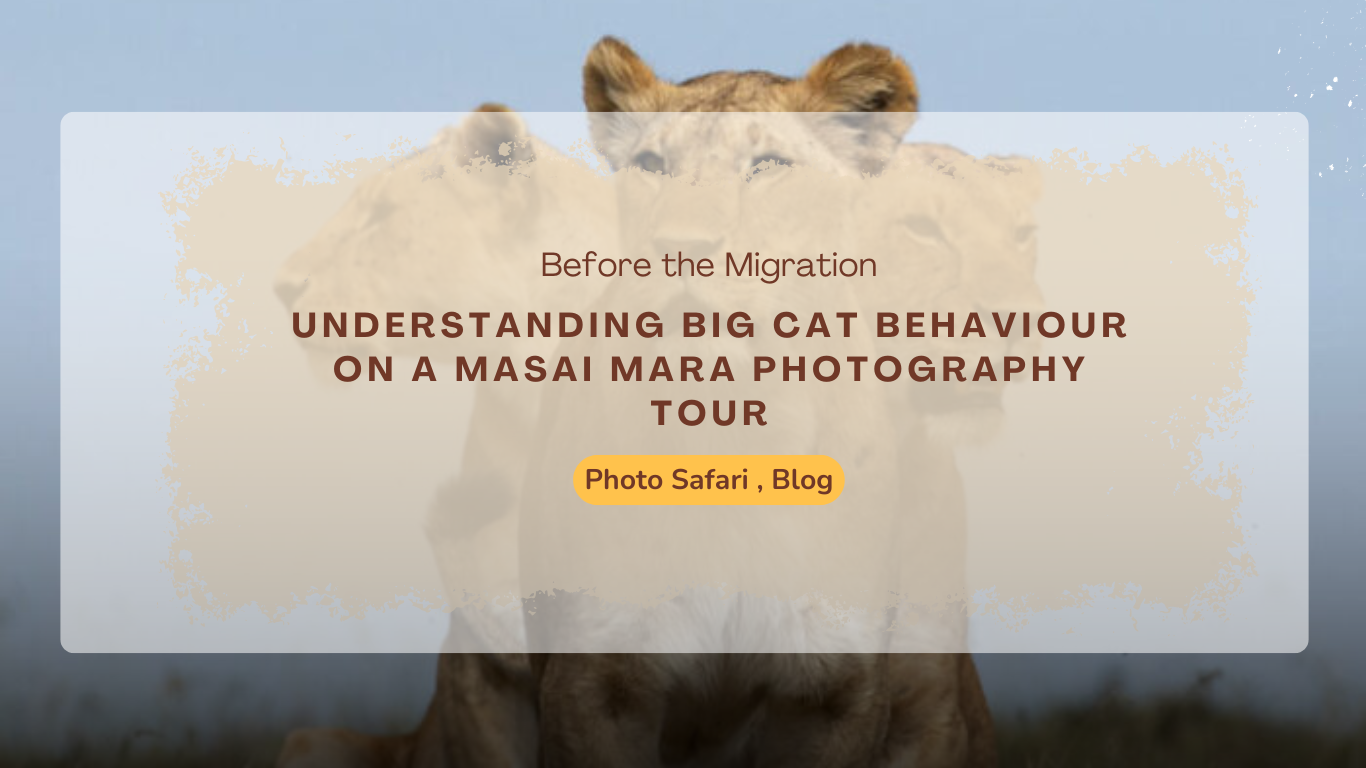
On a Masai Mara photography tour before the migration, timing and location determine the quality of wildlife encounters. Predators follow consistent routines in this period, moving between watering holes, ridge lines, and open plains. Masai Mara photography tour packages schedule early morning drives for lion activity and leopard movement, while late afternoons are reserved for cheetah sightings and golden-hour portraits. This structured approach ensures each masai mara photo safari maximizes natural light and animal behaviour rather than relying on chance encounters.
Choosing mara siligi camp as your base places you close to key predator corridors, reducing transit time and increasing shooting opportunities. Guides help revisit active locations throughout the day, allowing photographers to document behavioural sequences—such as stalking, resting, and interaction—across different light conditions. With patience and ethical positioning, photographers can safely capture compelling moments without disturbing wildlife. Over a 4–6 day itinerary, a Masai Mara photography tour becomes a layered narrative of predator life, offering diverse compositions that range from dramatic hunts to quiet, contemplative portraits in the golden savannah light.