



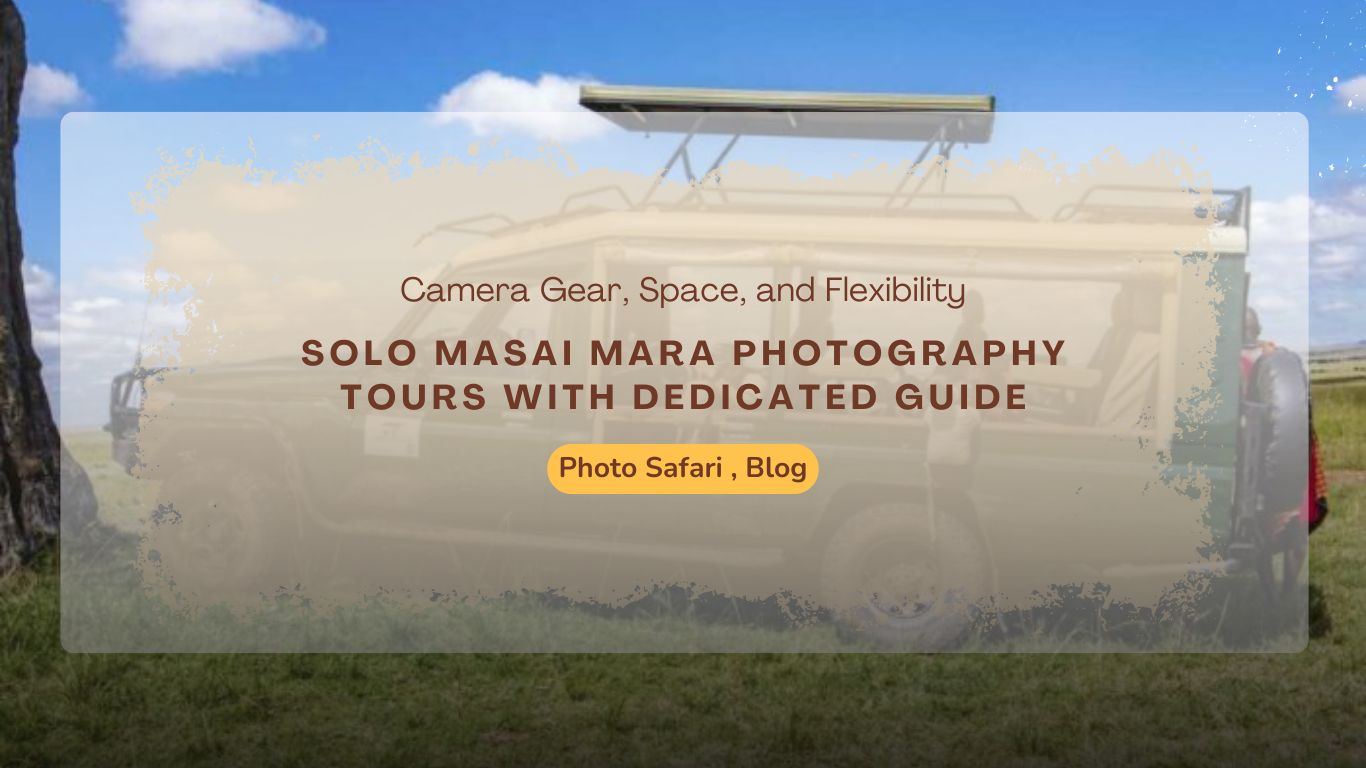
One of the most underrated advantages of a solo Masai Mara photography tour is one that experienced photographers understand immediately: space to operate. In a group vehicle, your second body stays in the bag. Your large prime sits awkwardly across your lap. Filters, spare cards, and batteries are buried under someone else’s bag in the foot well. You change lenses in eighteen inches of shoulder space, hoping not to drop anything, while the behaviour you were tracking finishes without you.
In a solo vehicle at Mara Siligi Camp, the entire setup changes. Your primary body sits on a bean bag, door-mounted, ready at all times. Your second body with a different focal length occupies the adjacent seat — switchable in two seconds. Your filter wallet, cards, and batteries sit at arm’s reach on the seat beside you. Rain cover and dust cloth are immediately accessible. A monopod or second bean bag is available on the rear seat for elevated shooting through the roof hatch. These are not comfort arrangements — they are operational efficiencies that eliminate the three to eight seconds of fumbling that costs you the frame when behaviour changes without warning. Over a full Masai Mara photography tour, those seconds compound into measurably more usable images. Masai Mara photography tour packages that give you a solo vehicle are offering something with direct impact on your output — not just on your comfort.